Search interest in polka dots just hit an all-time high — and the coat and blouse versions are leading the charge. It's a print that's easy to get precisely right or precisely wrong, so here's how to actually wear it well this season.
Quick Answer
The easiest way to wear polka dots in 2026 is to treat them as the only print in the outfit — pair one polka dot piece (a coat, blouse, or skirt) with solid neutrals like black, white, camel, or navy. Small, dense dots read classic; large, spaced-out dots read modern and graphic.
Why Polka Dots Are Everywhere Right Now
Polka dots have never fully disappeared — they cycle back every few years — but this time they've arrived alongside a broader shift toward quiet, wearable pieces rather than loud logos and micro-trends. A polka dot coat or blouse gives an outfit personality without demanding anything from the rest of your wardrobe, which is exactly why the print keeps resurfacing.
It also helps that polka dots are one of the few prints that read as both classic and playful depending entirely on scale and color. The same print can look like a vintage tea dress or a graphic modern statement, and that flexibility is what makes it worth investing in properly rather than buying a throwaway version.
Start With One Polka Dot Piece, Not a Full Look
Polka dots are a busy print, which means they work hardest when they're the only pattern in the outfit. A polka dot coat, blouse, or skirt paired with solid, neutral pieces lets the print actually be the statement instead of competing with anything else you're wearing.
There's a practical reason for this too: a single polka dot piece is far easier to restyle. One good polka dot blouse will work with black trousers, jeans, a camel skirt, and under a blazer — a head-to-toe polka dot outfit works exactly one way.
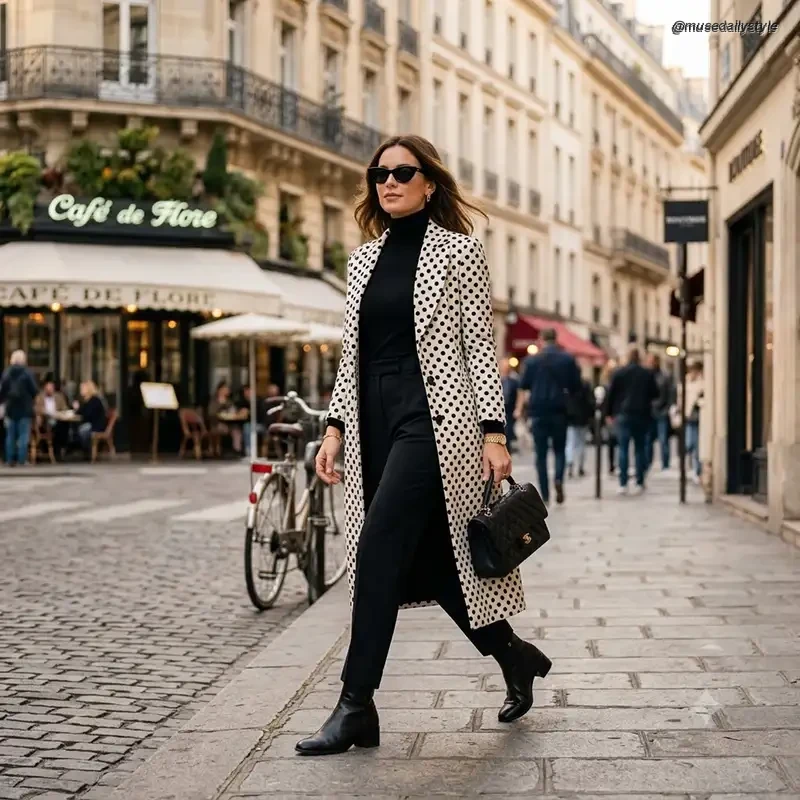
The Polka Dot Coat
This is the single most-searched polka dot piece right now, and it's also the easiest to wear:
- Throw it over almost any simple outfit underneath and it instantly becomes the focal point.
- Because it's an outer layer, it's the lowest-commitment way to try the print.
- Works over both dresses and separates without needing to coordinate the print with anything else.
What to wear underneath: keep it entirely solid. All-black, all-cream, or a neutral knit with matching trousers works best — the coat is doing all the work, so anything busy underneath fights it the moment you unbutton.
The Polka Dot Blouse
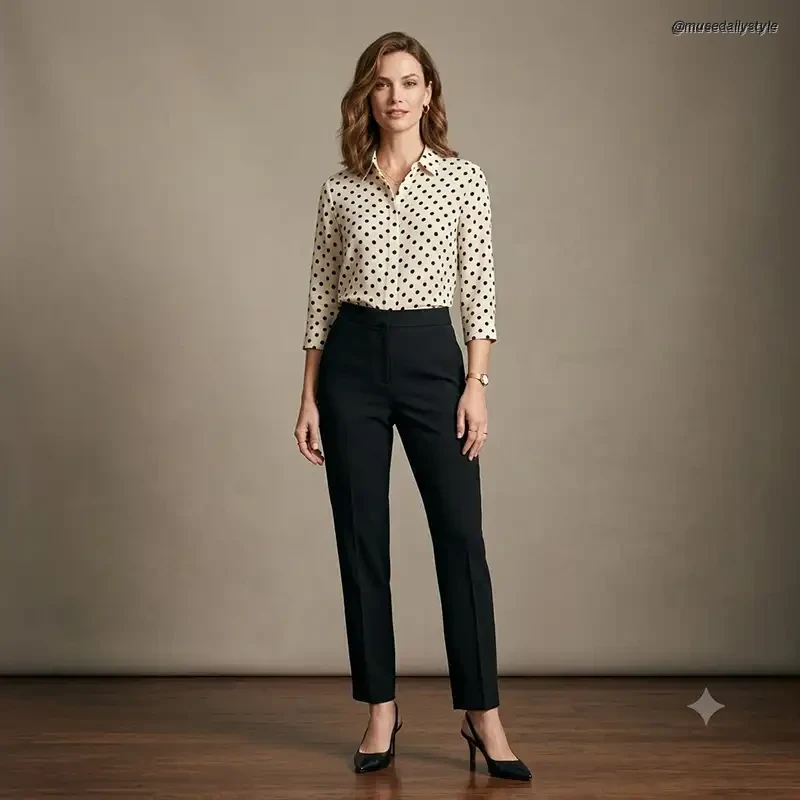
A polka dot blouse works especially well tucked into a solid-color trouser or skirt — the tuck keeps the print contained to your top half, which is more flattering and less overwhelming than a full polka dot dress for daytime wear.
Three ways to wear it:
- Fully tucked into tailored trousers — the most polished version, ideal for the office
- Half-tucked into straight-leg jeans — casual, softer, good for weekends
- Layered under a solid blazer or knit vest — the print peeks through at the collar and cuffs, which is the quietest way to wear it
The Polka Dot Skirt
A midi skirt in polka dots is the easiest bottom-half option because the length keeps the print in proportion. Pair it with a plain knit tucked in, a fitted tee, or a simple button-down, and let the skirt carry the outfit. Boots ground it for autumn; flat sandals or ballet flats keep it light for spring.
The Polka Dot Dress
A full polka dot dress is the boldest option, and it works best when the silhouette is simple — a shirt dress, a slip, or a straight midi. Add a solid belt at the waist and keep shoes and bag in one neutral tone, and the print stops feeling like a costume.
Polka Dot Trousers
Wide-leg polka dot trousers are the unexpected option, and they work far better than most people assume. The trick is keeping the top half completely plain and slightly fitted — a black or cream knit tucked in, or a simple white tee — so the volume and the print stay in one place.
Because the print sits low on the body, this is also the most forgiving way to wear large dots. Add a solid belt, keep shoes in the same tone as the trouser background, and the whole outfit reads intentional rather than loud.
Wear it with: fitted knit, solid blazer, pointed flats or block heels, structured bag in one neutral tone.
The Polka Dot Knit
A polka dot sweater or cardigan is the coziest version of the trend and the one that works hardest in autumn and winter. Knitted or jacquard dots read softer than printed ones because the texture slightly blurs the edges, which makes them easier to wear day-to-day than a crisp graphic print.
Pair a polka dot knit with straight-leg jeans and loafers for weekends, or with a solid midi skirt and boots for something more put together. A cardigan version worn open over a plain white tee gives you the print in an even smaller dose.
Wear it with: straight-leg denim, tailored trousers, or a solid midi skirt — nothing else patterned.
The Polka Dot Co-ord Set
A matching two-piece is technically head-to-toe print, but it's the one exception to the one-piece rule — because the set was designed as a unit, the dots line up and read as a single garment rather than a clash.
Keep everything else stripped back: solid shoes, one bag, minimal jewelry. A blazer-and-trouser set in small dots works for events and the office; a shirt-and-shorts or shirt-and-skirt set in larger dots works for summer and travel. If a full set feels like too much, split it and wear each half separately with solid neutrals.
Wear it with: matching neutral shoes and bag, gold jewelry, nothing else printed.
The Polka Dot Shirt Worn Open
Instead of buttoning a polka dot shirt, wear it open over a plain white or black tank with jeans or trousers. This breaks the print into two vertical panels, which is a much quieter effect than a fully buttoned shirt and one of the easiest ways to wear a large-scale dot.
It also solves the problem of a polka dot shirt you love but find too bold on its own. Roll the sleeves, leave it untucked, and let it function as a light layer rather than the main event.
Wear it with: plain tank or fitted tee, straight-leg jeans, sneakers or loafers, minimal jewelry.
Polka Dot Accessories
If you're not ready to commit to a garment, accessories give you the print in small doses:
- A silk scarf — tied at the neck, on a bag handle, or in your hair
- A small bag — polka dot canvas or printed leather against an all-neutral outfit
- Sheer polka dot tights — under a plain black dress or skirt, this is the subtlest version of the trend
- A hair bow or headband — barely-there, but it registers
Scale Matters More Than You'd Think
Small, dense polka dots read as classic and slightly vintage; large, spaced-out dots feel more modern and graphic. Neither is more "correct" — but matching your outfit's formality to the dot scale tends to look most intentional:
- Small dots — polished, slightly vintage, works for the office or dinner
- Large dots — casual-cool, graphic, works for weekends and daytime
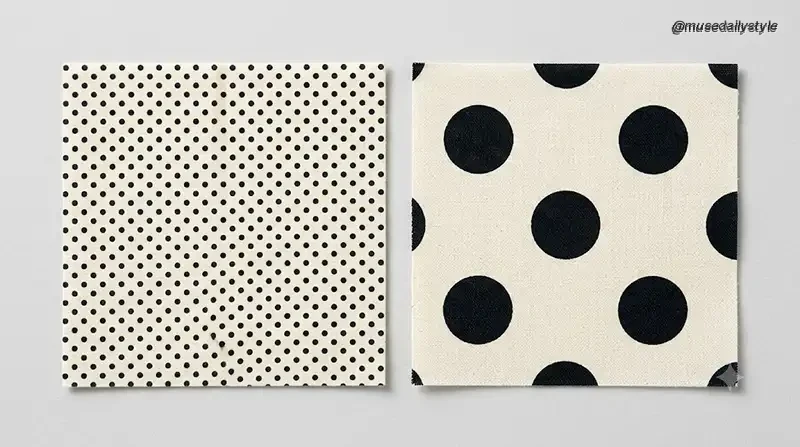
There's a middle option worth knowing about as well: medium dots, roughly the size of a coin. They're the most versatile of the three and the safest choice if you're only buying one polka dot piece, because they don't commit hard to either vintage or graphic.
Color Combinations That Work
The classic is black dots on white, but it's far from the only option worth considering:
- Black on white — sharpest and most graphic; pairs with black, grey, and denim
- White on black — softer and more forgiving; pairs with camel, cream, and gold jewelry
- Navy on cream — quieter and slightly nautical; pairs with tan leather and white
- Brown on cream — the warmest version and the most current; pairs with chocolate, camel, and ivory
- Tonal dots — cream on cream, black on charcoal; the most subtle way to wear the print
Keep the Rest of the Outfit Quiet
Because polka dots already bring visual interest, pair them with solid neutrals — black, white, camel, navy — rather than another print or a bold color. This is the single easiest way to keep a busy print from tipping into overwhelming.
The same logic applies to accessories. Simple gold jewelry, a structured bag in one solid tone, and shoes that match your bag will always look more considered than statement accessories competing with a statement print.
How to Wear It by Occasion
Office — small or medium dots, blouse tucked into tailored trousers, solid blazer, low heels or loafers.
Weekend — large dots, half-tucked blouse with straight-leg jeans, white sneakers, canvas or leather tote.
Dinner — polka dot midi skirt or slip dress, solid knit or fitted top, heeled boots or strappy sandals, minimal gold jewelry.
Events — polka dot dress with a simple silhouette, solid belt, matching bag and shoes, nothing else patterned.
Fabric Changes the Whole Look
The same print reads completely differently depending on what it's printed on. Silk and satin make polka dots look expensive and evening-appropriate. Cotton poplin makes them look crisp and daytime. Chiffon leans romantic and vintage. Wool or a coating fabric makes them look structured and modern.
If a polka dot piece feels cheap, the fabric is usually the reason rather than the print itself.
Common Mistakes to Avoid
- Mixing polka dots with another print (stripes, florals) in the same outfit.
- Pairing large graphic dots with very formal pieces — the scale reads casual no matter the fabric.
- Choosing a polka dot piece in a color you wouldn't normally wear, just because it's trending.
- Wearing polka dots head-to-toe as your first attempt at the print — start with one piece.
- Buying a thin, shiny polyester version — polka dots show poor fabric more than solids do.
- Adding busy accessories on top of the print instead of letting it stand alone.
What to Look for When You're Shopping
- Even, well-printed dots — misaligned or bleeding dots are the fastest sign of a cheap piece
- Print continuity at the seams — good construction lines the pattern up at the sides and shoulders
- A fabric with weight — it should drape rather than cling
- A color combination you already own things in — this is what determines whether you actually wear it
Key Takeaways
- One polka dot piece, paired with solid neutrals, is the most wearable way to try this trend.
- Coats are the lowest-commitment entry point; blouses work best tucked in.
- Small dots read polished; large dots read casual — match the scale to the occasion.
- Medium dots are the safest choice if you're only buying one piece.
- Trousers, knits, co-ord sets, and open-worn shirts all work — the print isn't limited to coats and blouses.
- Fabric matters as much as print — silk reads elevated, cotton reads daytime.
- Skip mixing polka dots with any other print.
Frequently Asked Questions
Are polka dots still in style in 2026? Yes — search interest is at an all-time high, with coats and blouses leading. Polka dots sit in the small group of prints that cycle back regularly rather than disappearing, which makes them a reasonable long-term buy.
What colors go with polka dots? Solid neutrals work best: black, white, cream, camel, navy, and denim. Match your solids to the background color of the print rather than the dots themselves.
Can you wear polka dots to the office? Yes. Small or medium dots on a blouse, tucked into tailored trousers with a solid blazer, is the most office-appropriate version.
Can you mix polka dots with stripes? It's possible but difficult — it requires a large scale difference between the two prints and a shared color palette. If you're new to the print, skip it.
Are polka dots flattering? Scale is what determines this more than anything. Smaller dots create a subtler overall effect, while large, widely spaced dots draw more attention to wherever they sit. Choose the placement based on where you want the eye to go.
What shoes go with a polka dot dress? Keep them solid and neutral — black or tan heeled boots, nude heels, ballet flats, or white sneakers depending on the occasion. Match your bag to your shoes for the most polished result.
Final Thoughts
Polka dots are proof that a print trend can be genuinely wearable, not just runway spectacle — one piece, paired with pieces you already own, is really all it takes. Start with a coat or a blouse in a color you already wear, keep everything else solid, and the print does the rest.