A plain top is supposed to be the easy part of getting dressed, and then the ribbing goes slack after two washes, or the tank strap slides off one shoulder by lunch, or the "fitted" tee turns out to mean fitted on the model and boxy on everyone else. Most of what gets sold as basic doesn't survive contact with an actual body and an actual laundry cycle.
The difference between a top that keeps its place in the rotation and one that gets pushed to the back of a drawer is almost always fit, not fabric — a scoop neck cut close through the collarbone, a racerback that actually holds a strap in place, a long sleeve in the right weight to wear alone. What follows are the ones people keep going back for, plus a few print pieces worth adding once the basics are covered.
Short answer: Build the basics layer first — a ribbed scoop-neck tee, a structured tank, and one long-sleeve weight you actually reach for in cool weather — then add a print piece or two once the solids are covered. Fit matters more than fabric here: a ribbed knit that's genuinely fitted through the body does more for an outfit than a boxier tee in a "nicer" material.
The Ribbed Tee That Replaces Half Your T-Shirt Drawer
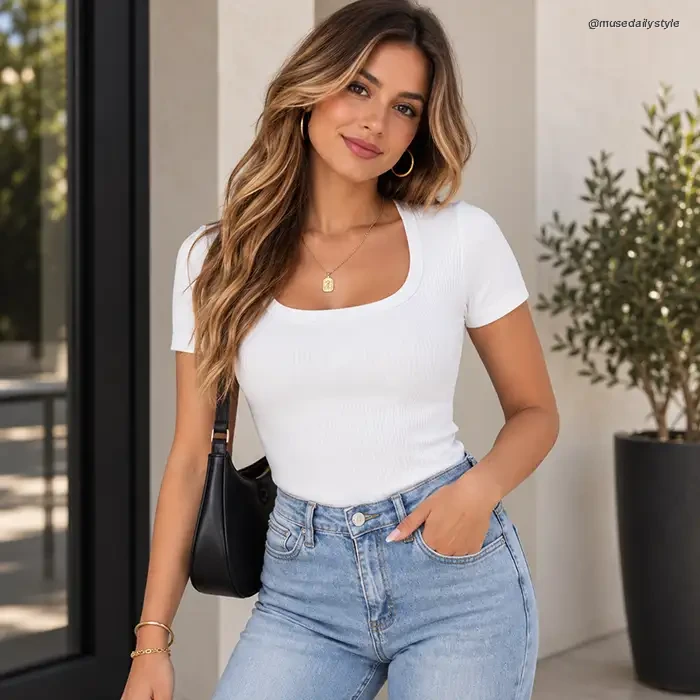
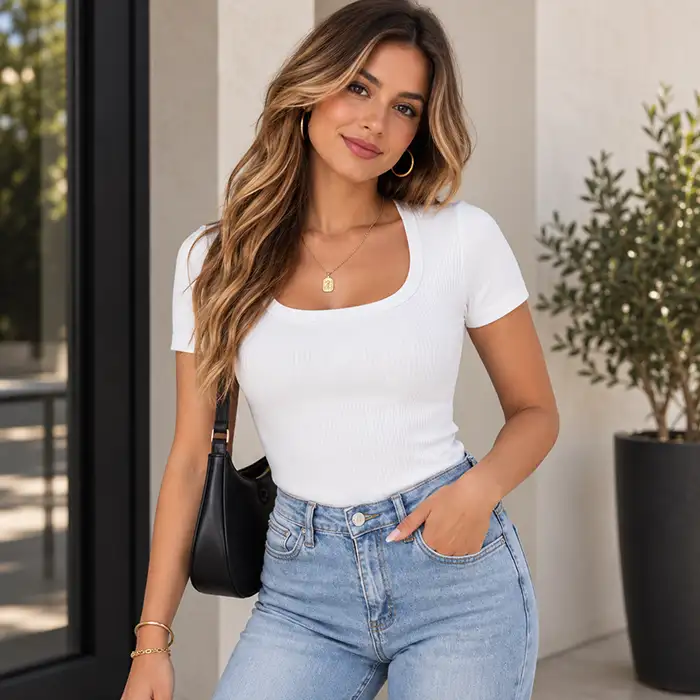
A ribbed knit does something a plain jersey tee can't: it holds its shape against the body without needing built-in structure to do it. The scoop neckline here is squared off rather than rounded at the base, sitting close to the collarbone in a way that reads more finished than a standard crew — which is why it works as easily under a blazer as it does with just jeans.
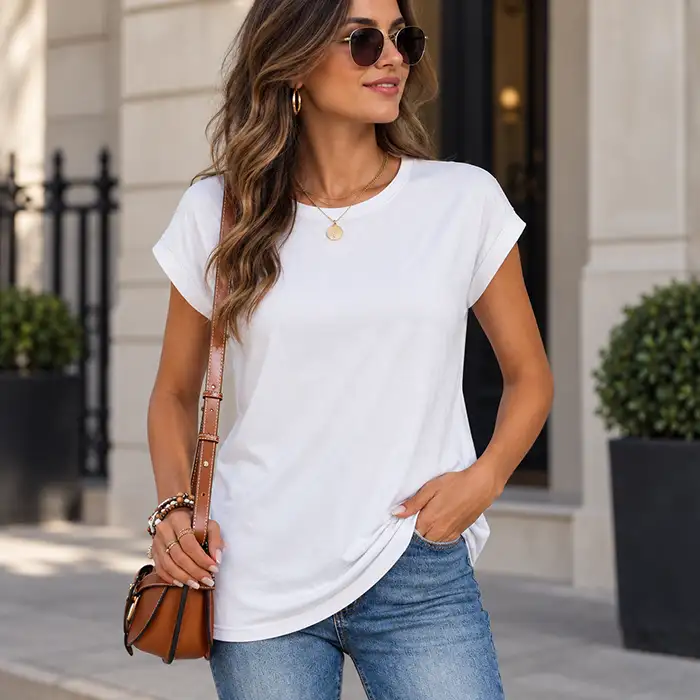
A cap-sleeve version of the same idea trades the fitted ribbing for a looser jersey body but keeps a rolled, twisted hem at the front. That twist catches just enough fabric to sit slightly asymmetric rather than falling in a flat straight line, which reads more considered than it should for something this simple.
Buy the ribbed version first if you're only getting one. It photographs better, holds up to more washes than thin jersey, and works alone in warm weather or layered under a cardigan without adding bulk.
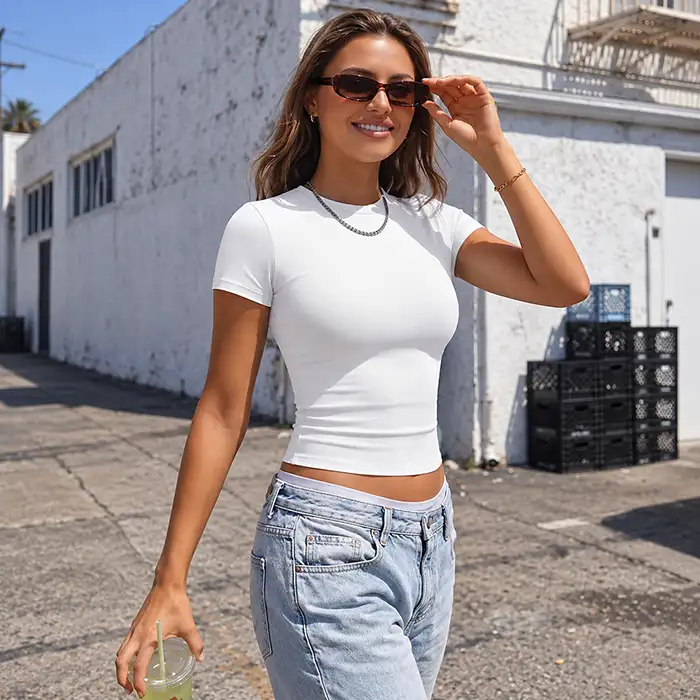
Some links above may be affiliate links.
Worth knowing: ribbed knit runs closer to the body than the size chart suggests on some of these — if you're between sizes and plan to wear it alone rather than layered, size up.
Tank Tops Built to Layer, Not Just Sit Under Something
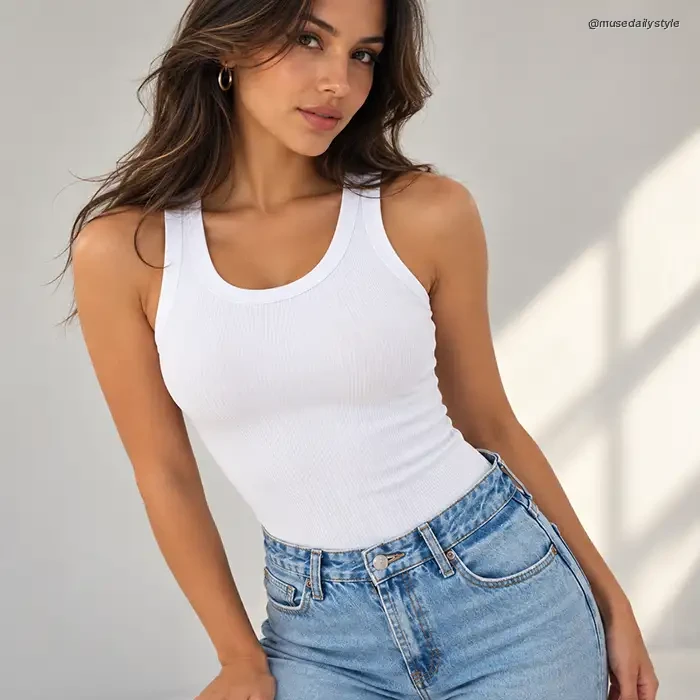
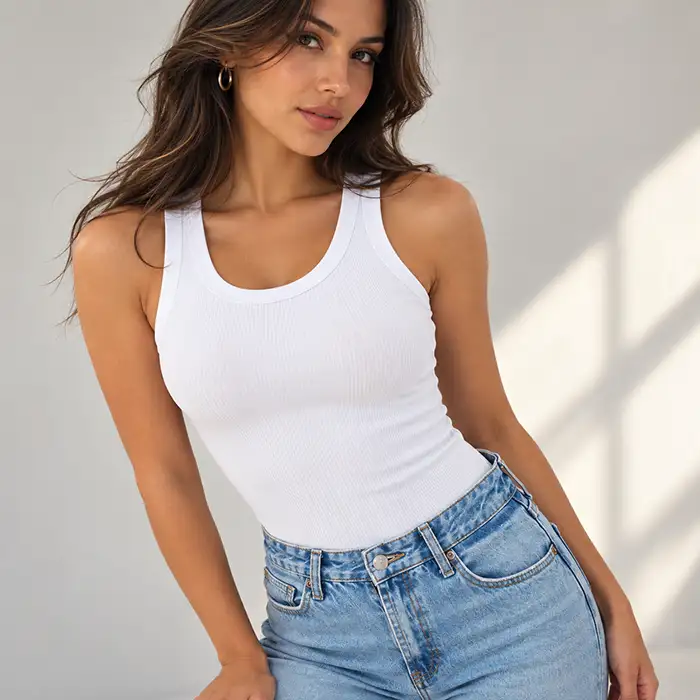
A racerback cut is the detail that separates a tank you can wear alone from one that only works underneath something else. The crossed strap at the back sits further in from the shoulder edge than a standard tank, which gives a regular bra strap somewhere to hide and keeps the tank from slipping when you reach overhead. Paired with a thick strap up front, it holds its shape at the shoulder in a way a thin spaghetti strap never does.
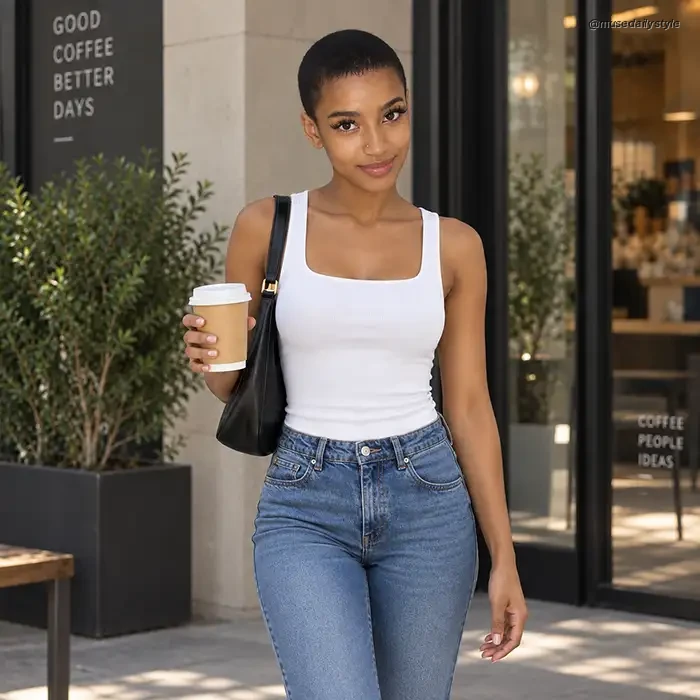
A square-neck version trades the racerback for a squared-off neckline and strap, which reads slightly dressier — closer to something worn under a blazer with the buttons open than something built for the gym. Both are solving the same problem: giving you a tank with enough structure to function as the outfit's actual top layer.
If you're stacking tanks under shirts and cardigans all winter, this is the category worth spending slightly more on. A tank that loses its shape after a few washes shows through everything layered on top of it.
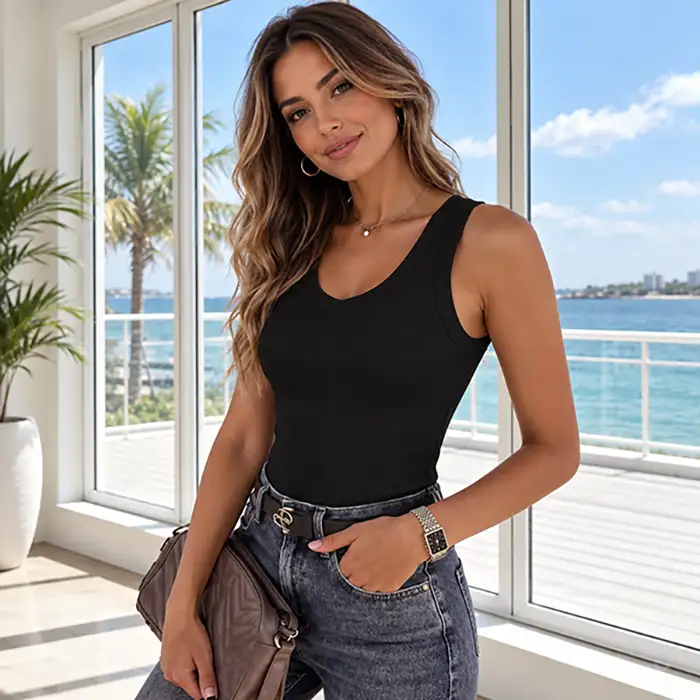
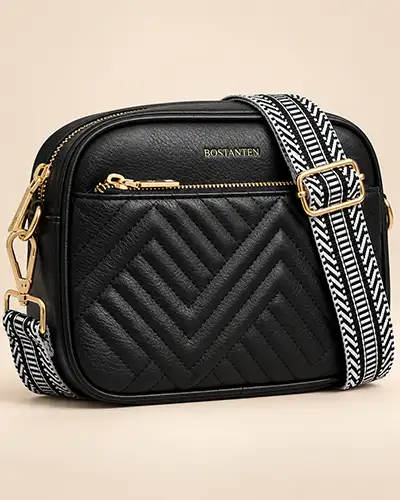
Some links above may be affiliate links.
The Long-Sleeve Layer That Carries You Into Cooler Weather
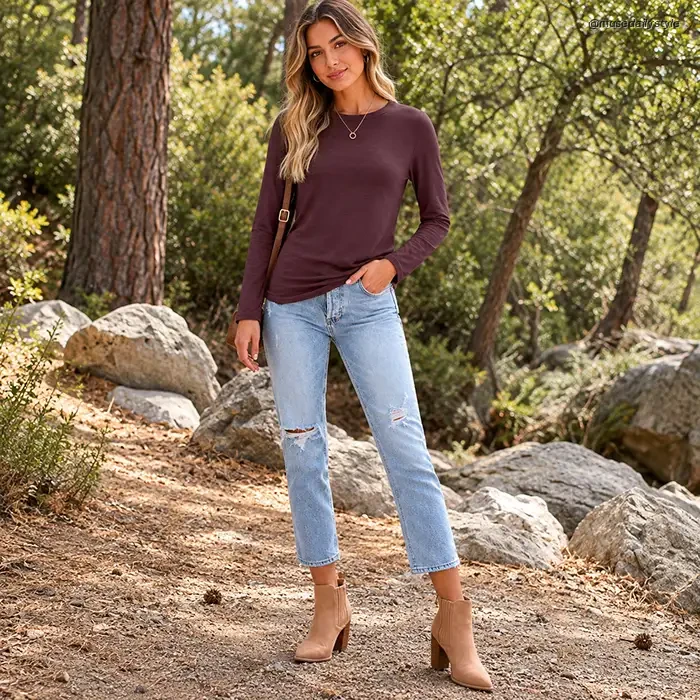
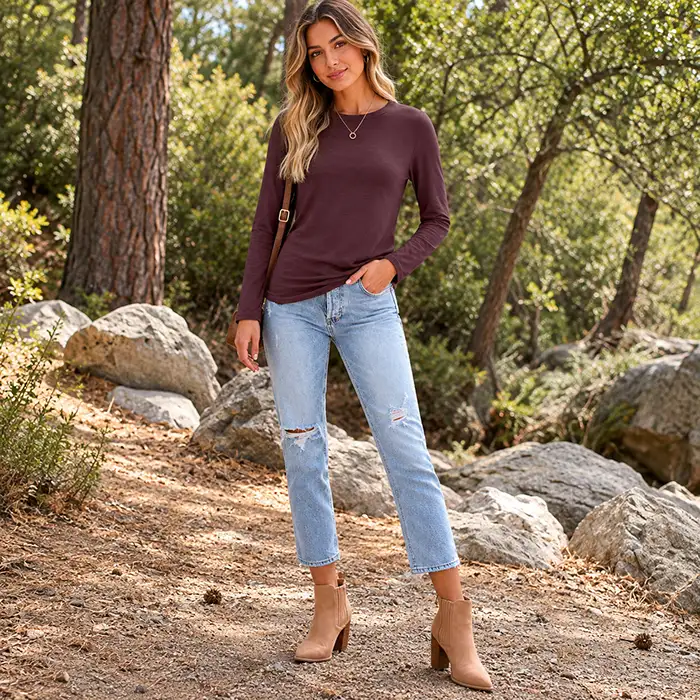
This is the weight of long-sleeve top a lot of closets are actually missing — a mid-weight cotton crewneck that sits between sweater-thick and too-thin-to-wear-alone, working on its own from early autumn through a mild winter day. The maroon shown here is a smarter buy than another black long-sleeve: it reads as a color choice rather than a fallback, and it sits well against denim, camel and cream without fighting any of them.
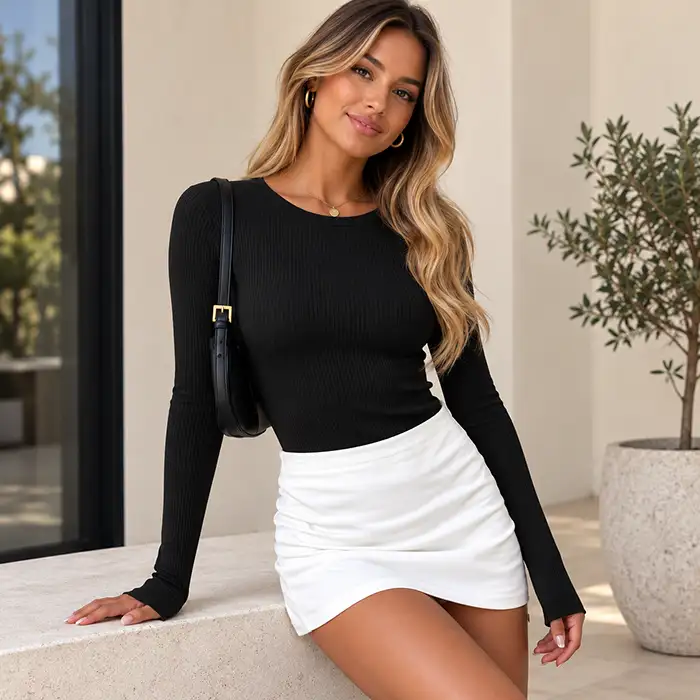
A fitted, ribbed long-sleeve goes dressier — close through the body, higher neckline, meant to be seen rather than layered under a jacket. That's the one to reach for with a mini skirt or tailored trousers, somewhere a boxier crewneck would look sloppy.
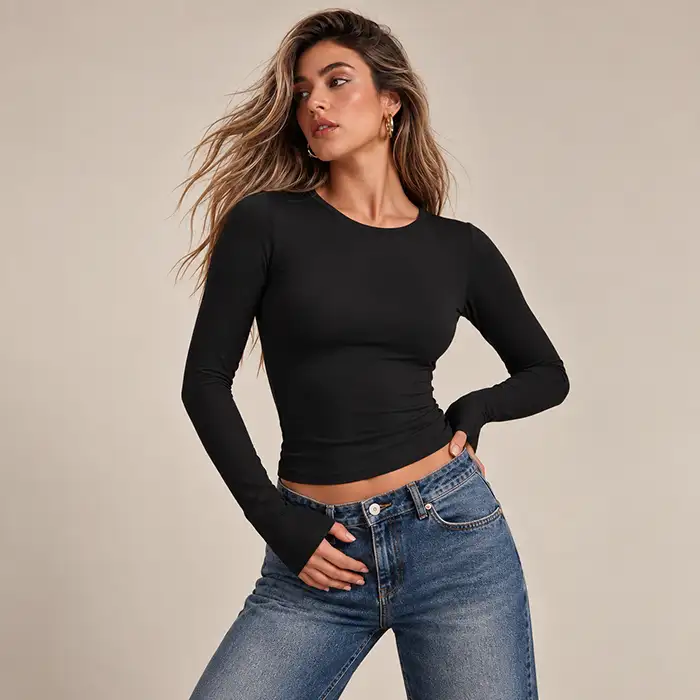
There's also a genuinely fitted, stretch option worth flagging for anyone who wants the long-sleeve basic without any bulk at all — it sits close enough to the body to tuck cleanly into high-waisted denim, which a looser crewneck can't do without bunching.
Some links above may be affiliate links.
Worth knowing: fitted ribbed long sleeves like these sit close enough to show every seam on what's underneath — wear seamless basics, or nothing at all, beneath them.
Print and Texture, Without Losing the Basics Foundation
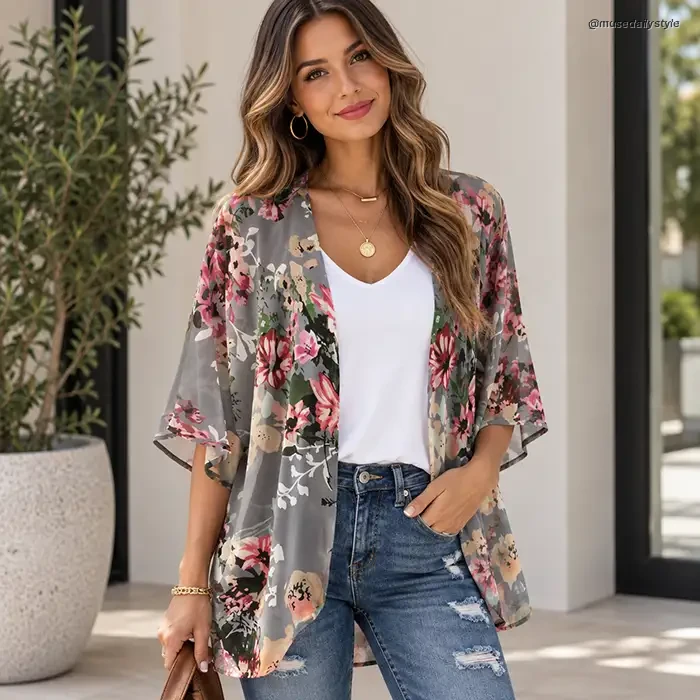
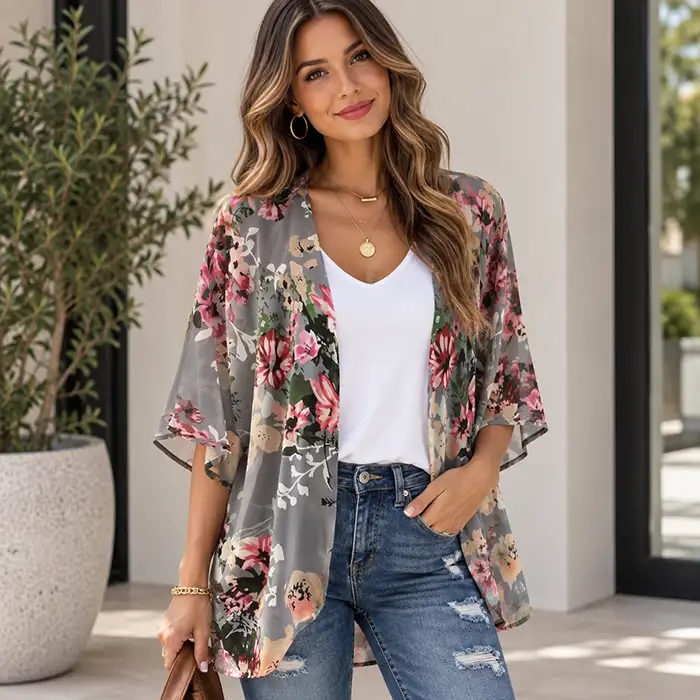
A wardrobe built entirely from solids gets flat fast, and this is the easiest way back out of that without buying anything hard to style. A sheer floral kimono works precisely because it's an open layer — it goes over any of the solid tops above without needing to match anything, and the loose kimono sleeve keeps it from feeling like a real jacket you have to commit to.
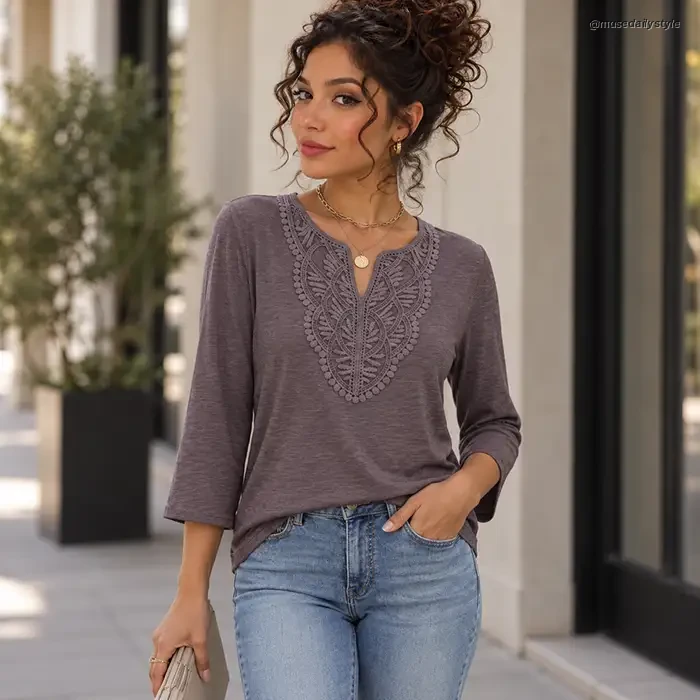
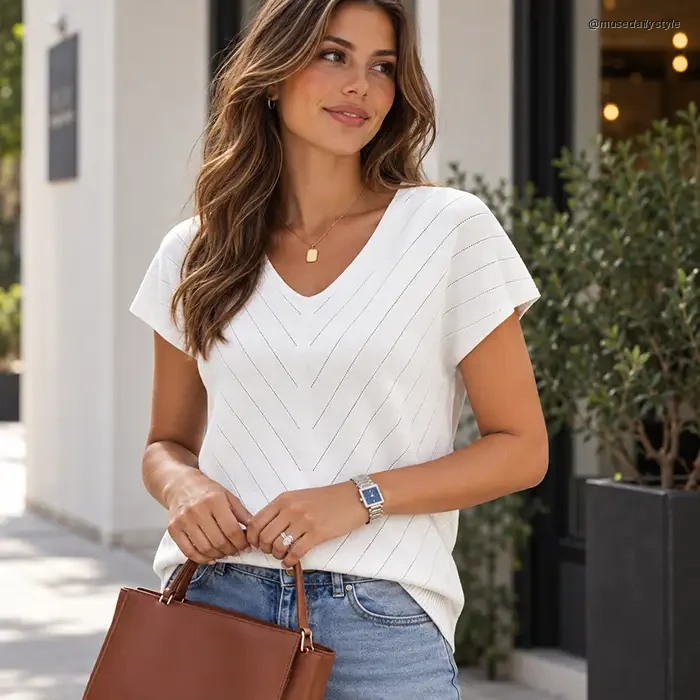
A crochet-trimmed notch neckline is another route into texture without going full print — the trim supplies the visual interest while the base color stays wearable enough for daily rotation. A fine chevron-knit tee does the same job for texture that the crochet trim does for detail: subtle enough to wear constantly, textured enough that it doesn't read as another plain white top in photos.
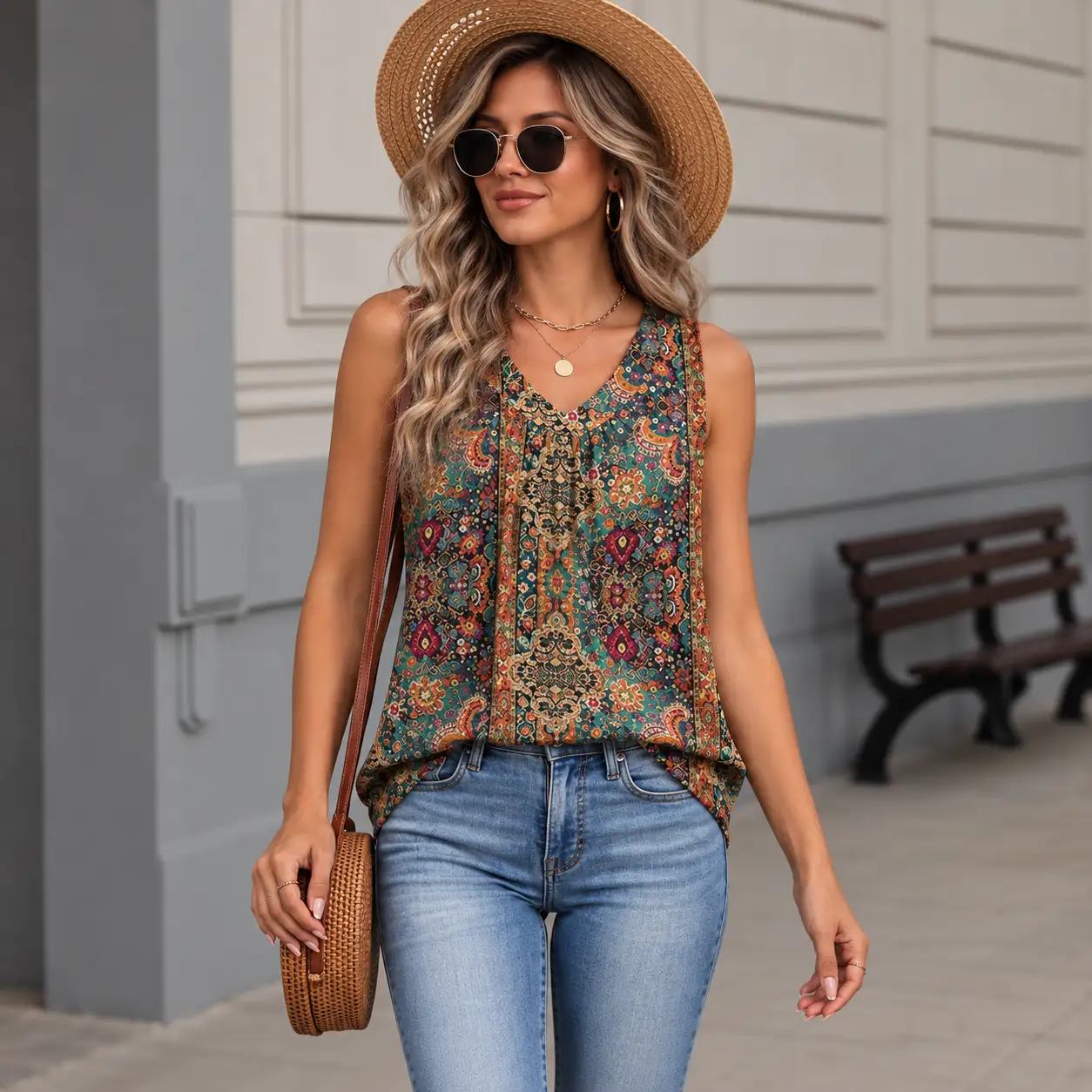
The paisley tank is the boldest move of the group — a dense, warm-toned print with a tasseled placket at the front, worn as the outfit's actual top rather than a layer. Prints this busy work best when everything else stays plain: jeans, a plain bag, nothing else competing for attention.
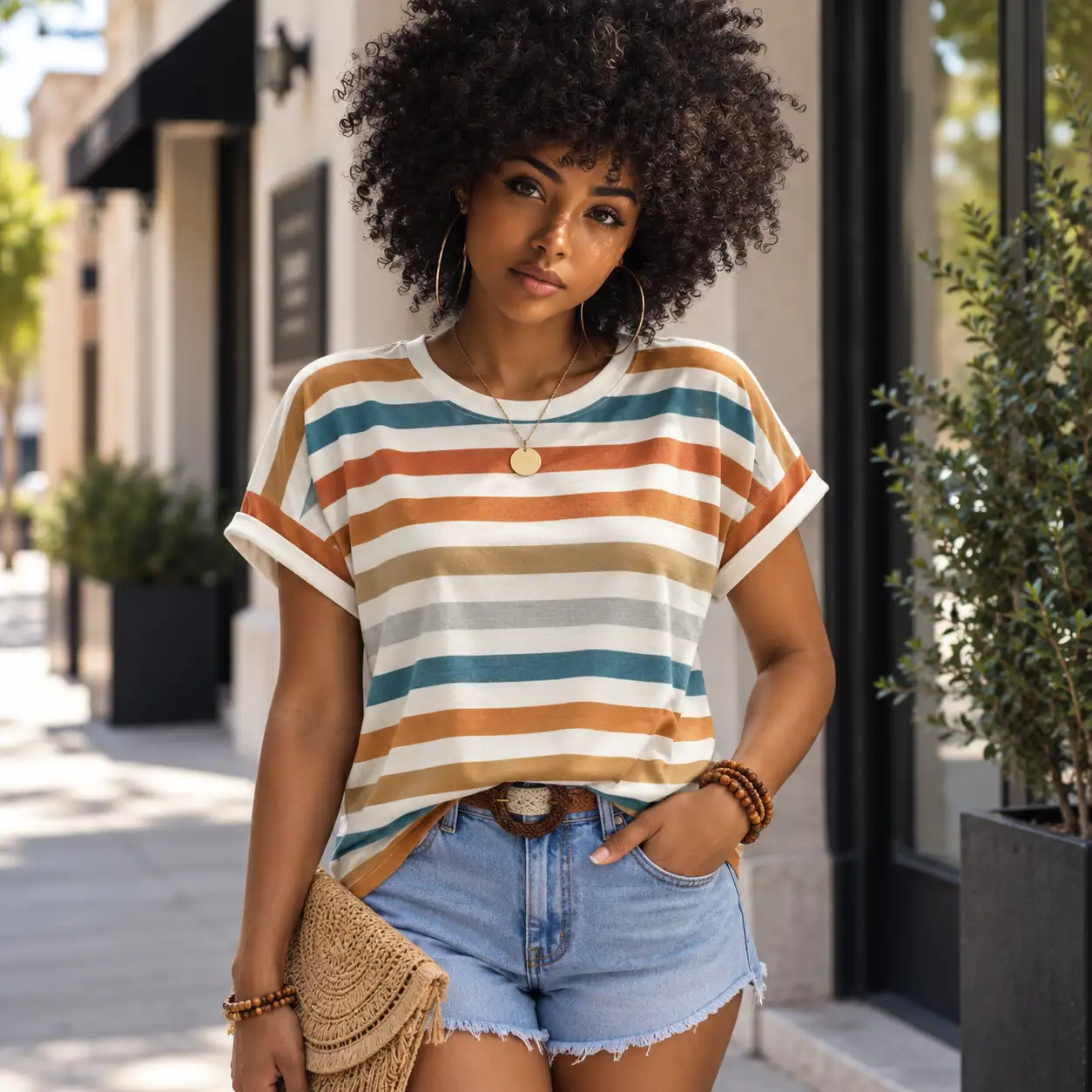
For something quieter, a fine horizontal stripe in muted rust, teal and cream does the same "not another solid tee" job with far less commitment. A multi-color stripe like this one reads as a neutral once there are two or three solid basics on either side of it in an outfit.
Some links above may be affiliate links.
The Pieces That Cross Into Off-Duty and Athletic Wear
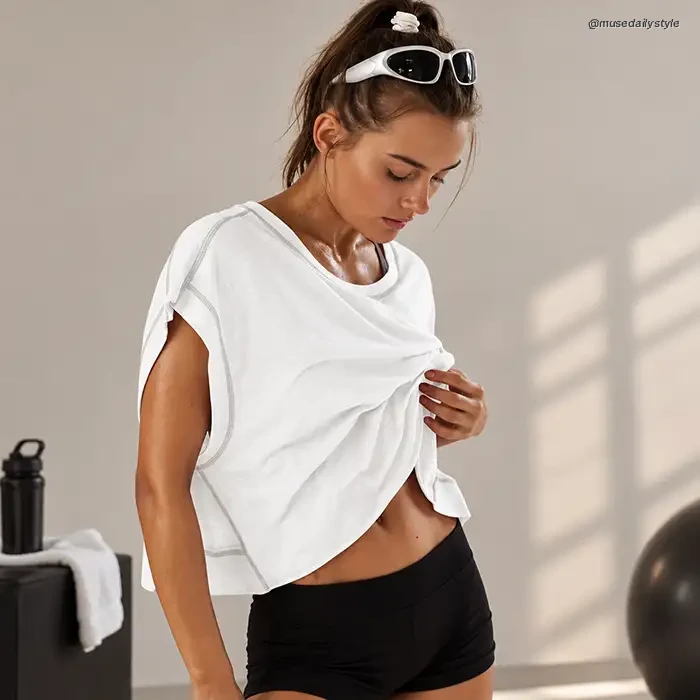
This last group covers the tops that move between a workout and the rest of the day without a wardrobe change. The oversized cotton tee here has an open back and a twisted, gathered hem at the front — loose enough to move in, but that gathered hem keeps it from looking shapeless the moment you're off the mat and running errands.
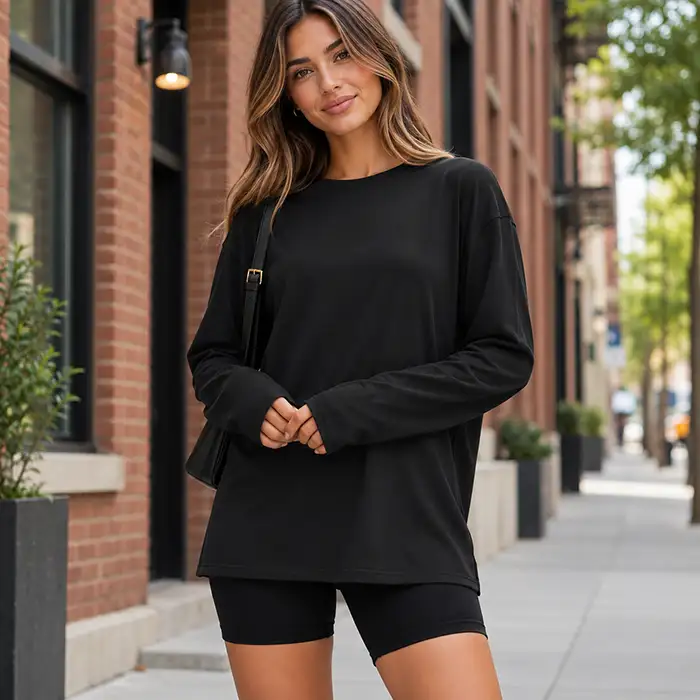
An oversized long-sleeve crewneck does the same job for cooler weather: dropped shoulder, roomy sleeve, worn over bike shorts or leggings, the kind of piece you can sleep in and also wear to get coffee without changing.
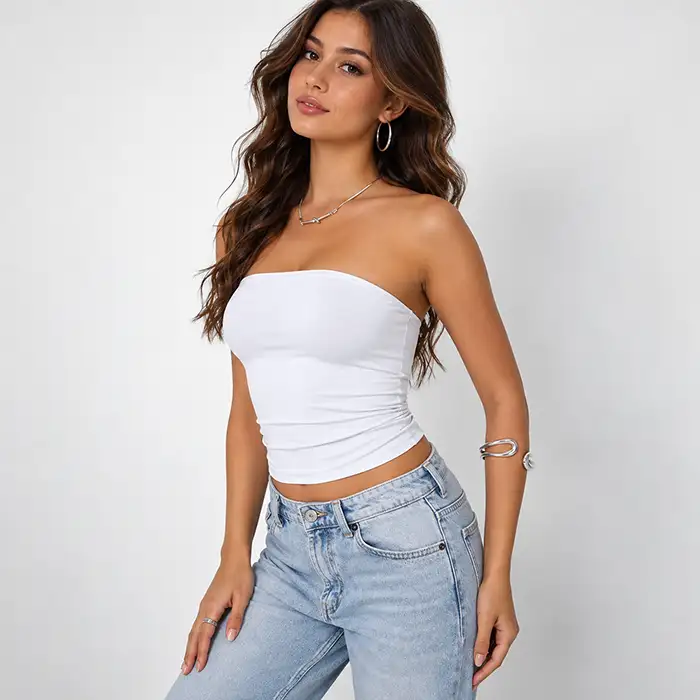
And for anyone who wants one going-out piece in the mix, a strapless bandeau top, ruched at the side seam, works under an open shirt or blazer for evening in a way none of the daytime basics above are built for. It's the exception on this list worth having on hand for the nights the rest of it doesn't cover.
Some links above may be affiliate links.
Building the Basics Wardrobe
Start with fit, not fabric
A ribbed knit in a mediocre color that actually fits close to the body gets worn more than a "better" fabric in a boxy cut. Fit is the first filter, every time.
One long sleeve, one tank, one tee — in that order
If you're building from nothing, buy the long-sleeve layer first. It covers more months of the year than a tank and more temperature range than a short-sleeve tee.
Let prints replace jewelry, not compete with it
A paisley or floral top is already doing the job a statement necklace would. Keep jewelry minimal on print days and save the layered gold for the solid basics.
Buy the racerback or square-neck cut for tanks you'll wear alone
A tank you're only ever layering under something can be thinner and cheaper. A tank doing the job of the outfit's top needs the structure to hold up on its own.
Don't skip the in-between weight
Most closets have thin summer tees and heavy winter sweaters, with nothing in between. A mid-weight long sleeve is the piece that actually gets worn on the days that are neither.
Which Basic Should You Buy First?
| Piece | Best worn | Reads as |
|---|---|---|
| Ribbed scoop-neck tee | Alone or under a blazer | Everyday, polished |
| Racerback ribbed tank | Alone in summer, layered otherwise | Structured basic |
| Mid-weight long sleeve | On its own, most of the year | Reliable, season-spanning |
| Floral kimono | Open, over any solid top | Effortless texture |
| Paisley tank | As the outfit's main top | Bold, warm-toned |
| Open-back workout tee | Gym to errands | Off-duty, casual |
| Bandeau top | Under an open shirt or blazer | Evening-ready |
Frequently Asked Questions
How many basic tops does a capsule wardrobe actually need?
Somewhere around five to seven core pieces covers most people — two or three ribbed tees or tanks, one long-sleeve weight, and a couple of prints or textures to break up the solids. More than that and you're back to a full closet, just in fewer colors.
Is ribbed knit warmer or cooler than a regular jersey tee?
Roughly the same — the difference is texture, not fabric weight. What ribbing actually changes is fit: it holds close to the body instead of draping, which is why it reads more polished than a standard tee in the same weight.
Can you wear a workout tee as a regular top?
Yes, as long as the cut isn't built entirely for movement. An oversized tee with a twisted or gathered hem, like the one above, reads as a casual top the moment you swap leggings for jeans.
What's the difference between a tank top and a bandeau?
A tank has straps and is built to be worn on its own all day. A bandeau is strapless and generally styled as a layering piece — under something open, for a shorter stretch of wearing, since it relies on the fabric staying put without a strap holding it.
How do I keep an all-basics wardrobe from looking boring?
Texture and print, used sparingly. One crochet trim, one kimono, one bold print top mixed into a week of solids does more than buying five different colors of the same plain tee.
The Tops Worth Actually Buying
None of this is about chasing a trend — it's about closing the gaps that show up every time you're getting dressed and reaching for the same three tops because nothing else fits quite right or holds its shape past the first wash. A ribbed tee, a tank with real structure, one long-sleeve weight, and a print or two to break up the solids covers more outfits than a closet twice the size built without a plan.
Start with whichever gap is loudest in your own closet. If you already own enough plain tees, skip straight to the kimono or the paisley tank — the print pieces are what make outfits look finished, not the basics underneath them.
This post may contain affiliate links. If you buy something through one of them, we may earn a small commission at no extra cost to you.