The button-down has quietly become the hardest-working shape in fashion, and it isn't confined to the office anymore. Marie Claire notes that the shirt dress silhouette has moved well beyond the work-dress category, reworked in tailored and belted lines and in fabrics far removed from standard cotton — Nicole Kidman wore an oversized button-down to a Chanel show, and Anne Hathaway took a custom shirt dress to the red carpet.
What makes this shape worth understanding is that it's really three garments wearing the same collar. There's the shirt you tuck or knot. There's the shirt dress you wear on its own. And there's the shacket — the shirt cut heavy enough to work as a jacket — which has become the layering piece most people reach for between seasons.
The seven pieces below cover all three, in denim, chambray, cotton stripe and brushed plaid. Each one solves a slightly different styling problem, and the differences are more interesting than the similarities.
Short answer: A button-down works best when one thing is oversized and everything else is close to the body. Wear shirt dresses on their own with a defined hem or a belt, layer shackets open over something fitted, and knot or tuck a standard shirt so it hits at your natural waist.
The Denim Shirt Dress You Can Wear Three Ways
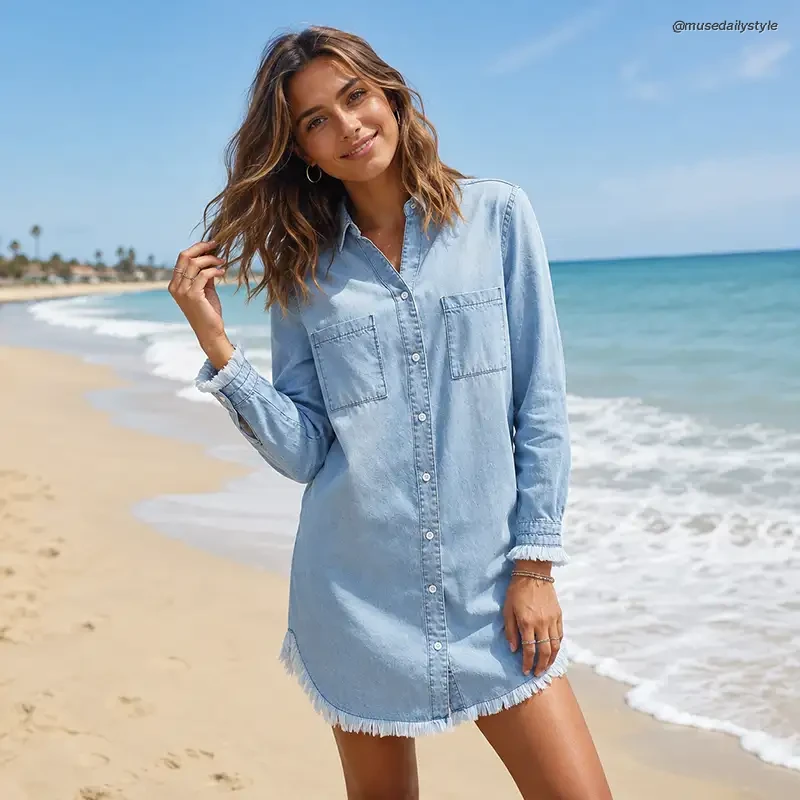
A light-wash denim shirt dress in a relaxed cut is one of the few pieces that genuinely earns its place three seasons a year. Worn alone with the sleeves pushed up, it's a summer dress. Buttoned over a swimsuit, it's a cover-up. Over jeans or leggings with the buttons open, it's a long jacket.
The details on this one are doing more than they appear to. The raw frayed hem at the cuff and skirt stops a plain denim shirt dress from reading like a uniform — that unfinished edge is the difference between a piece that looks casual on purpose and one that looks unremarkable. The curved shirttail hem is the other quiet detail: it sits shorter at the sides and longer at the front and back, which makes the whole thing more flattering than a straight cut would be.
The wash matters too. Very light denim reads softer and more summery. If you want a shirt dress that works into autumn, go two or three shades darker and the same piece will take tights and boots without argument.
How to style it: Leave the top two buttons open, roll the cuffs to just below the elbow, and add a slim belt at the natural waist if you want shape. Flat sandals in summer, white sneakers for a school run, ankle boots when it cools.
Styling an Oversized Striped Maxi Shirt Dress
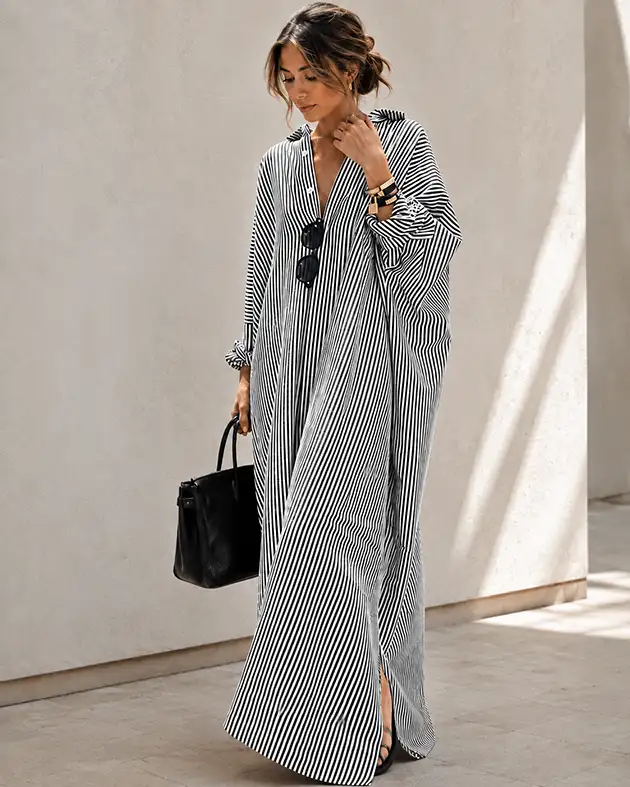
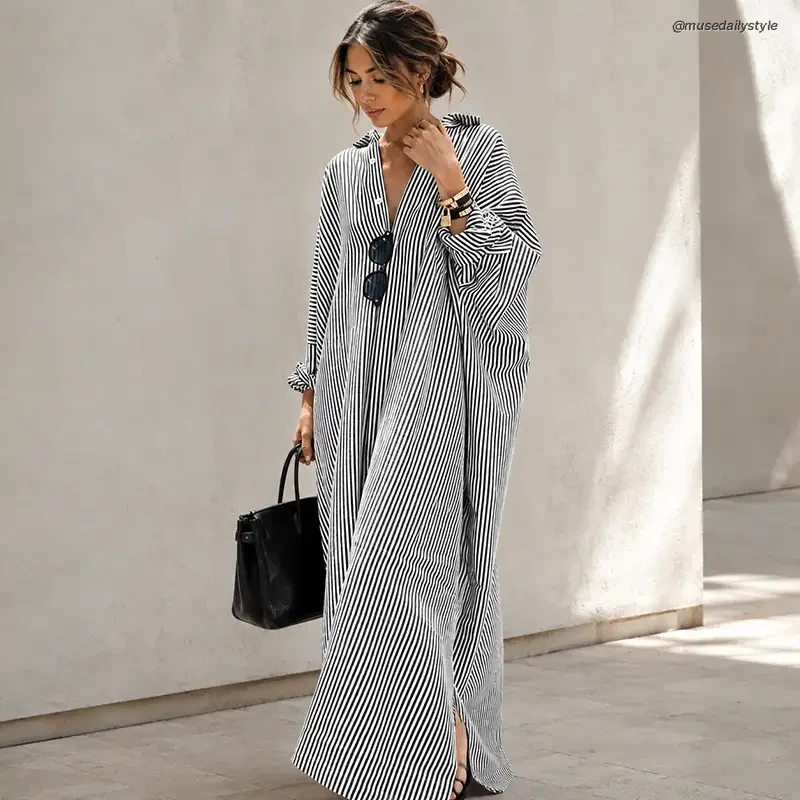 This is the most fashion-forward piece of the seven and the one people find hardest to wear. A floor-length cotton shirt dress with fine vertical stripes and a deep open placket is pure volume — batwing sleeves, no waist definition, fabric everywhere.
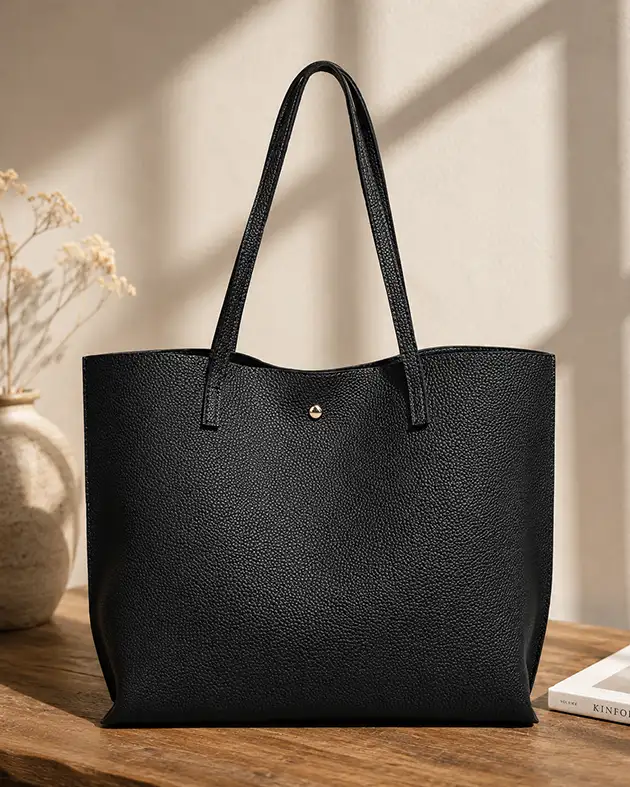
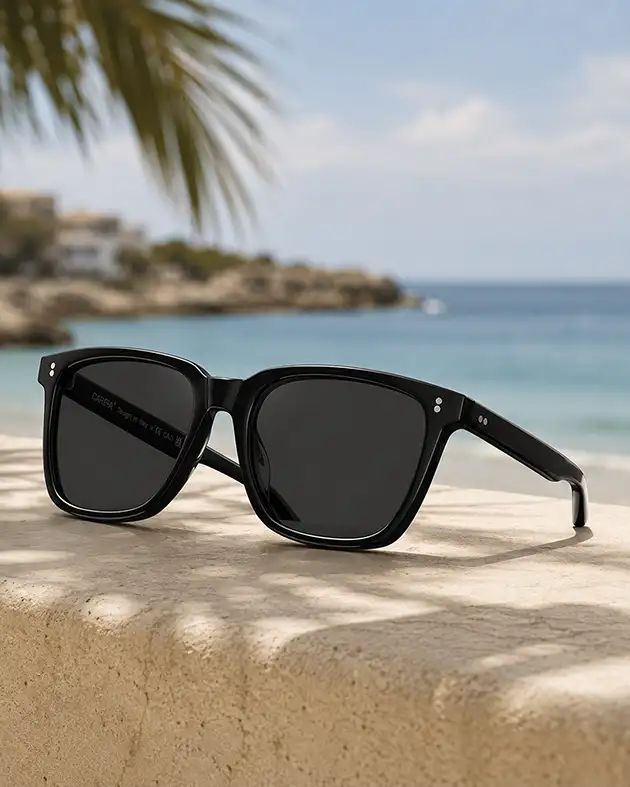
The reason it works here rather than swallowing the wearer is the accessories, and they're worth studying. A structured black leather tote with a hard frame. Flat black sandals. Sunglasses hooked into the neckline. Every single one is small, sharp and dark against a huge pale garment. Volume needs an anchor, and hard accessories are that anchor.
The vertical stripe is also load-bearing. Fine vertical lines pull the eye up and down rather than across, which is what stops a maxi this generous from reading as a tent. The same dress in a horizontal stripe would be a very different proposition.
Some links above may be affiliate links.
How to style it: Keep everything else narrow. A structured bag over a slouchy one, flat sandals or a low mule, hair off the face. If the open front feels like too much, wear it over slim white trousers and treat it as a duster instead of a dress.
The Plaid Shacket Over a Crop Top
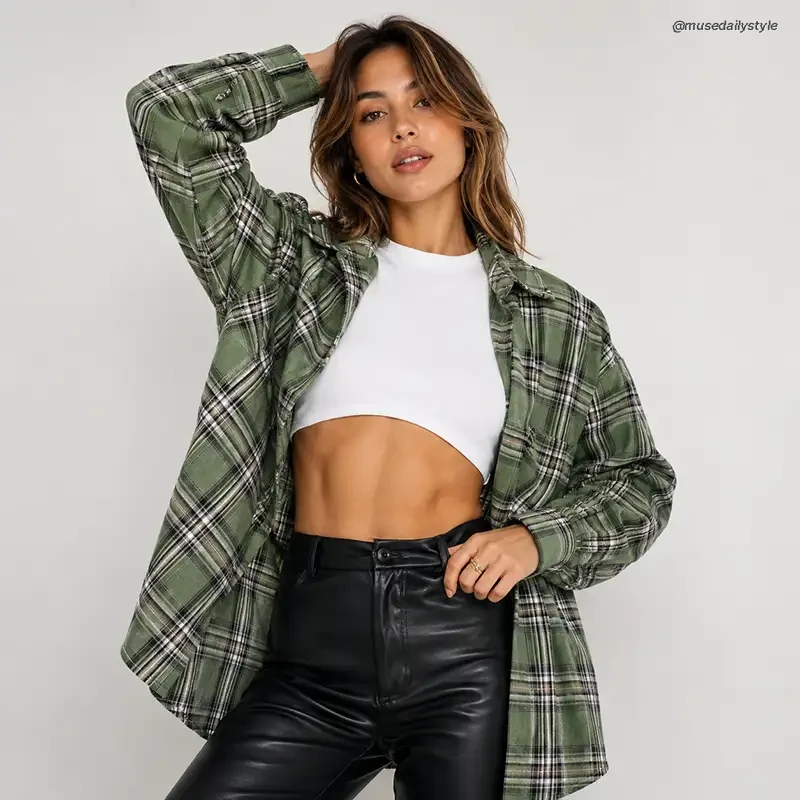
Here's the layering principle that makes shackets work, demonstrated cleanly: oversized on top, fitted underneath, skin or a defined waist in between.
The green plaid shacket is deliberately big — dropped shoulder, roomy sleeve, hem past the hip. Underneath it is a plain white crop top. Below that, high-waisted black faux leather trousers. Three pieces, three completely different weights: brushed flannel, soft cotton jersey, smooth coated leather. That texture contrast is what makes an otherwise simple outfit look considered.
Worn closed, this shacket would erase the wearer's shape entirely. Worn open, it becomes two vertical panels framing a narrow centre — the same trick a long cardigan pulls, but with more structure in the shoulder.
The soft sage green is a smarter buy than the red-and-black buffalo check most people default to. It sits comfortably with cream, white, black, denim and camel, which is more of your wardrobe than a high-contrast plaid will ever cover.
How to style it: Always open, always over something fitted. If a crop top isn't for you, a tucked white ribbed tank or a fine-knit bodysuit does the same job — the point is that the layer underneath skims the body while the shacket doesn't.
The Easiest Denim Dress Shape to Wear
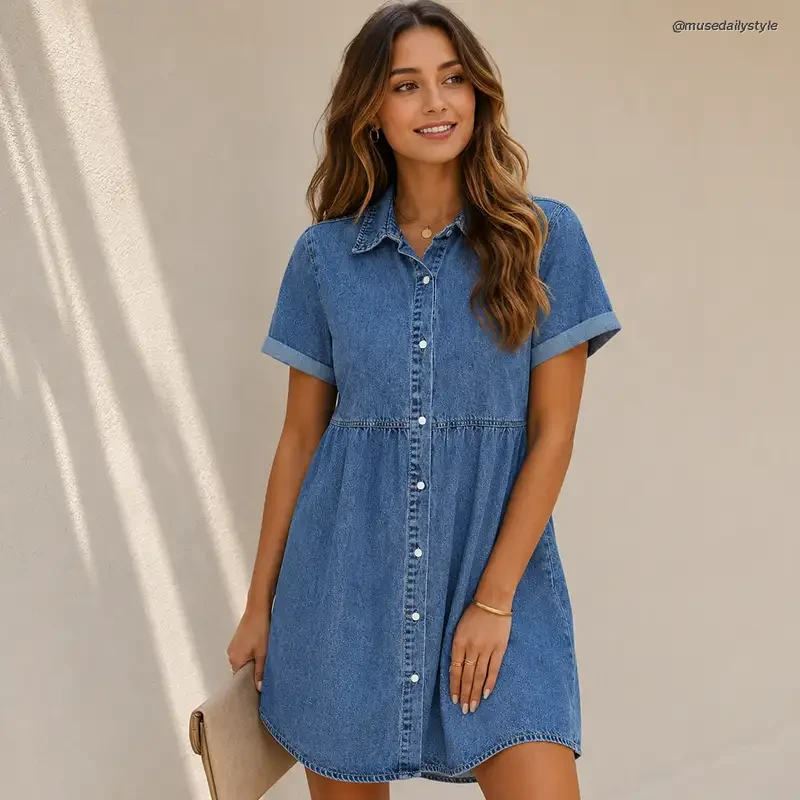
If the maxi feels like too much and a fitted dress feels like too little, this shape is the middle ground — and it's the most forgiving of the seven.
The construction is worth naming because it explains why. The bodice is cut close through the shoulder and chest, then the fabric gathers into a seam that sits high, just under the bust, and falls away from there. That's a babydoll or empire line, and it defines the narrowest part of the torso while skimming everything below it. Mid-wash denim in a soft, light weight keeps it from looking stiff.
The styling is minimal and correct: a fine gold pendant, a neutral clutch, nothing competing. Short sleeves with a folded cuff keep the arm line clean. When a dress has this much going on structurally, adding a statement necklace or a busy bag just muddies it.
How to style it: Delicate gold jewellery, a neutral or tan bag, and flat sandals in summer. In autumn, add opaque tights, tall boots and a cropped jacket that ends above the skirt's gathered seam — a longer jacket would cut straight across the fullest part and lose the shape.
How to Knot a Chambray Shirt
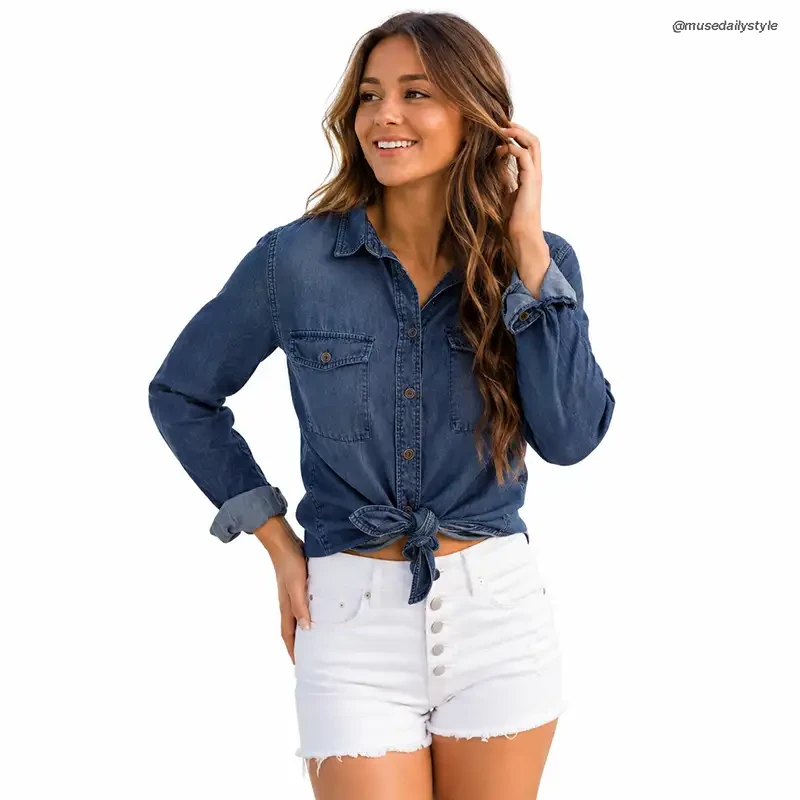
Every wardrobe should have one dark chambray shirt, and the knot is the technique that makes it earn its keep.
Tying the front hem does something a tuck can't: it creates a defined waist while leaving the shirt loose through the shoulder and chest. That's a much more comfortable silhouette than a full tuck, and it works with high-waisted shorts, jeans and skirts alike. The rules are simple — knot at or just above the natural waist, keep the top two or three buttons open, and don't pull it tight enough to strain the fabric.
The white denim shorts are the other half of the equation. Dark chambray against crisp white is high contrast, which reads sharper and more deliberate than the mid-blue-on-mid-blue most people default to. That's the general principle with double denim: keep the two washes several shades apart or match them exactly, but avoid the near-miss in between.
The western details — snap-style buttons, flap chest pockets, a slightly pointed yoke — give the shirt more character than a plain chambray, and they're what make it interesting on its own rather than only as a layer.
How to style it: Knotted over white or cream shorts in summer, worn open over a black tank with jeans in autumn, or layered under a knit with just the collar and cuffs showing.
The Long Plaid Shacket, Belted
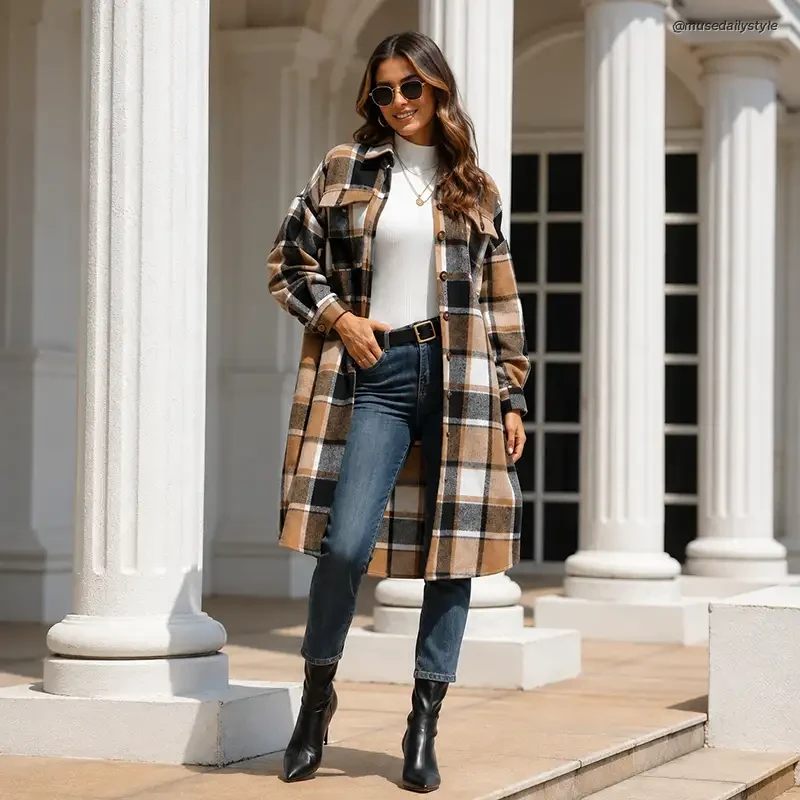
This is the most polished way to wear a shirt jacket, and one detail is responsible for most of it.
Look at the belt. It's black leather with a plain buckle, worn on the jeans rather than over the shacket, and it's the only thing stopping this outfit from becoming a straight vertical line of plaid. It marks the waist, breaks the length, and adds a hard finish to an outfit built mostly from soft brushed fabric.
The rest is a masterclass in restraint. A white turtleneck — high neck, close fit, no pattern. Dark straight jeans. Black pointed knee-high boots that swallow the hem. The shacket carries a busy camel, black and white check, so nothing else is allowed to compete. That's the rule with any large-scale plaid: one pattern, everything else solid.
The camel base is why this coat works harder than a red plaid would. Camel, black and white is a neutral palette, which means it goes with the denim you already own instead of demanding a whole outfit built around it.
How to style it: Slim or straight jeans rather than wide — the shacket already supplies the volume. A fine knit underneath, a belt somewhere in the picture, and boots tall enough to close the gap between the hem and your ankle.
Black Denim Shacket, All-Black Outfit
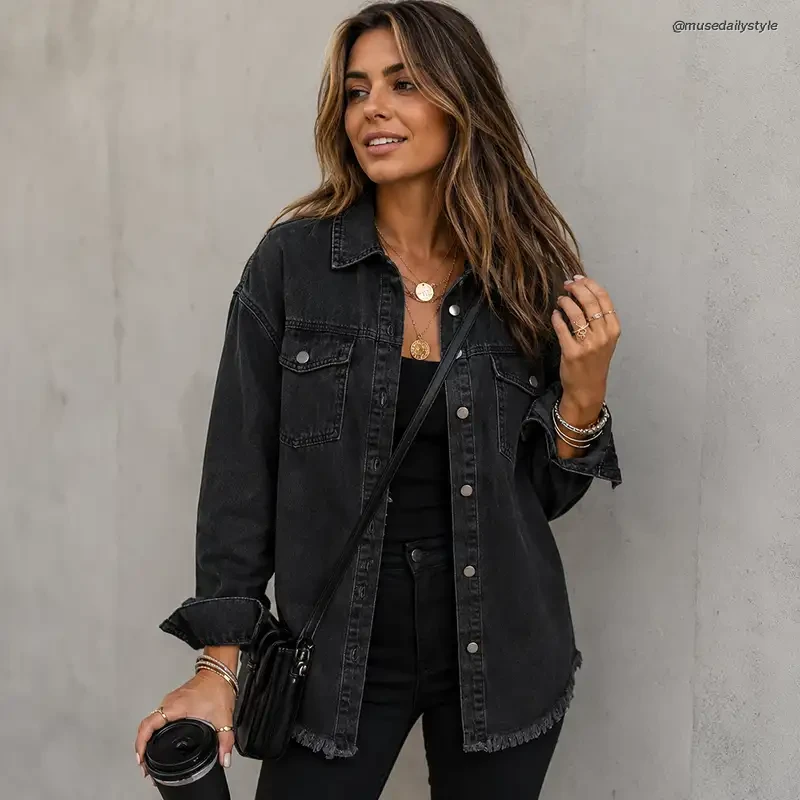
Black on black is the most-recommended outfit in fashion and the easiest one to get wrong. It fails when every piece has the same flat finish. It works when the textures differ, which is exactly what's happening here.
The washed black denim shacket has visible fading at the seams, a raw frayed hem, metal snap buttons and heavy stitching. Worn over a plain black top and black jeans, it supplies all the surface interest an all-black outfit needs. Nothing has to be added — the outfit is monochrome but not flat.
The accessories follow the same logic. A black leather crossbody strap running diagonally across the chest breaks the vertical line. Layered gold chains at the neck and stacked rings on the hand give the eye somewhere warm to land. Gold against faded black is a better pairing than silver, which tends to disappear into the wash.
This is also the most practical piece of the seven. A black denim shacket layers over almost anything, doesn't show wear, and reads as intentional whether you're wearing it with leggings or with tailored trousers.
How to style it: Over head-to-toe black for the sharpest version, over a white tee and blue jeans for the most casual, or over a slip dress with boots if you want something between the two.
Button-Down Styling Tips
Match the fit to the job
A shirt you plan to tuck should fit close through the shoulder. A shirt you plan to layer should be a size or two up. Trying to make one shirt do both is why most people end up wearing neither.
Sleeve length changes everything
Rolling a sleeve to just below the elbow shortens the arm line and makes any button-down look more relaxed. Rolled to mid-forearm reads sharper and more deliberate. Left long and buttoned at the cuff, it reads formal. Same shirt, three different registers.
Let the shoes decide the occasion
The denim shirt dress with flat sandals is a beach outfit. The same dress with heeled ankle boots is dinner. If a button-down look feels wrong, change the shoes before you change the outfit.
Buy shackets in a substantial fabric
The difference between a shacket that looks like outerwear and one that looks like a shirt you're wearing hopefully is weight. Brushed flannel, wool blend, heavy cotton twill or proper denim. Thin polyester plaid collapses on the shoulder and never quite convinces.
Keep one metal
Gold with warm tones — camel, cream, light denim, brushed plaid. Silver with cool ones — grey, stark white, black. Pick one and carry it across earrings, necklace and rings rather than mixing.
Undo more buttons than feels natural
Two open buttons is the default most people wear. Three opens the neckline, lengthens the torso and makes a boxy shirt look far less like a uniform. This is the single fastest way to make any button-down look less stiff.
Which Button-Down Should You Buy First?
| Piece | Best worn | Reads as |
|---|---|---|
| Light denim shirt dress | Alone or belted | Easy, warm-weather |
| Striped maxi shirt dress | With hard accessories | Fashion-forward |
| Denim babydoll dress | With fine gold jewellery | Feminine, forgiving |
| Chambray shirt | Knotted or open as a layer | Everyday |
| Plaid shacket | Open over something fitted | Casual layering |
| Long plaid shacket | Belted, over slim jeans | Polished |
| Black denim shacket | Over all-black or a white tee | Hardest-working |
Frequently Asked Questions
What should I wear under a shacket?
Something fitted. A ribbed tank, a fine-knit turtleneck, a bodysuit or a plain tee tucked into high-waisted trousers. Shackets are cut oversized, so the layer beneath needs to hold the shape that the shacket gives up.
Are shackets still in style?
Yes — the shirt-jacket has settled into a wardrobe staple rather than a passing trend, largely because it fills the gap between a shirt and a coat that nothing else covers. Fabric quality is what dates a shacket, not the shape itself.
How do I stop a shirt dress from looking shapeless?
Three options, in order of ease: belt it at the natural waist, knot the excess fabric at the hip, or size down and wear it open over something narrow. A defined waist somewhere is all most shirt dresses need.
Can you wear a denim shirt with jeans?
Yes, as long as the two washes are clearly different — a dark chambray shirt over light jeans, or a pale denim shirt over indigo. Matching a mid-blue shirt to mid-blue jeans is the version that looks accidental.
What's the difference between a shacket and a flannel shirt?
Weight and cut. A shacket uses heavier fabric, is cut roomier through the body and shoulder, and is designed to be worn open as a layer. A flannel shirt is a shirt — lighter, closer, meant to be buttoned.
What This Shape Really Gives You
The collar and the placket are the same across all seven of these pieces. Everything else — how it fits, what it's made of, how long it is — decides whether you end up with a beach cover-up, a work dress or a jacket.
That's the practical takeaway. You're not choosing between seven different garments so much as choosing which version of one very reliable idea fills a gap in what you already own. If you're not sure which, start with the black denim shacket. It's the one you'll reach for without thinking about it.